Laser Skin Resurfacing
Healthy, attractive skin provides a foundation for the rest of your appearance. Sun damage, wrinkles, dark spots, or acne scars effect all of us at some point, and reversing these signs of aging can be a challenge with cosmetics alone.
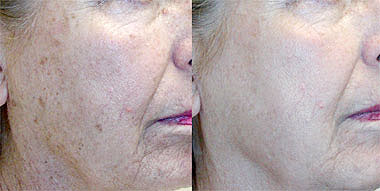
Laser skin resurfacing at our Little Rock med spa allows us to remove the damaged layers of skin and promote new, healthy skin growth, dramatically improving the skin’s appearance after treatment. There’s little if any downtime involved, and best of all, these improvements will last—like you’ve given your skin a clean slate.
What Can Lasers Help Me Improve?
- Restore a “rosy glow” to a yellowish or sallow gray complexion.
- Dramatically reduce wrinkles around the mouth, eyes and cheeks.
- Virtually erase sun-induced brown spots and acne scars.
- Smooth “hills and valleys” caused by chicken pox scars.
What are my Laser Resurfacing options?
We offer a variety of laser technologies to meet your needs, including the Sciton Profile Laser to reduce fine lines, acne scars, sun spots, and hyperpigmentation, and the EpiLaze® system for laser hair removal.
- BBL Photofacial: BBL is ideal for treating redness, brown spots and other types of age-related discoloration. It works by targeting pigment in the skin with light energy. BBL is usually best for patients with fair skin.
- Sciton Profile Laser: Learn all about this versatile, state-of-the-art laser system, and why we believe it’s the best for treating many top skin concerns.
- Laser Hair Removal: Imagine never shaving again! In just a few treatments, the EpiLaze® Hair Removal System can help you get smooth, hair-free skin and a low-maintenance look.

“Beautiful and super updated Clinic. Everything is perfect, neat, the staff is so kind and organized, as soon as you walk through the door, the girls great you by your name… I highly recommend Cosmetic Surgery Center, in Little Rock AR, Dr Branman and his staff. it is well worth the trip to LR!”
Is There Any Recovery After Laser Resurfacing?
Depending on the laser treatment you receive, you may have no downtime, or you may need to rest at home for a few days. We will apply dressing to your skin to keep it moist, until the new outer layer reforms in 5-7 days. It is important to keep the areas clean.
Initially, redness may be very pronounced. This may last several weeks or months, but can be often camouflaged with post-operative cosmetics. Tenderness or a mild sunburn sensation is expected.
Remember, healing after a surgical procedure is a gradual process. Very quickly you will notice a significant improvement in your skin quality and appearance. Subtle signs of continuing improvement will usually occur for 6-12 months. You will continue to enjoy your younger looking, smoother, healthier skin for many years to come.
Are there any risks to laser skin resurfacing?
Laser resurfacing is a popular procedure, and is usually very safe when performed by a qualified medical professional. Although complications are rare, they can and do occur, including obvious darkening or lightening of the skin, scarring, or an infection. You can minimize your risk by choosing a provider with demonstrated knowledge and experience in multiple laser platforms, who will be able to recommend a treatment that is safe for your skin type.
Learn more about a laser skin resurfacing in Little Rock
What to expect during your treatment – from start to finish
In this video, our very own Registered Nurse April Gring walks you through the laser skin resurfacing process – from prepping for your procedure through your full recovery. For more information about surgical procedures at our surgery center, please watch our general surgery video here.
Video transcript »
Hey y’all, April Green here, coming to talk to you about one of my favorite procedures—full face laser resurfacing. This procedure really gives awesome results, and sometimes we can even extend it down onto your décolleté or chest area if you have some sun damage there. If you haven’t already watched the general surgery information video, go ahead and do that before diving into this.
Here’s what you’ll need at home: your prescription medications, as you’ll have quite a few since we’re breaking the skin barrier and leaving open wounds. We really want to protect against any microorganisms. You’ll have an antibiotic, Diflucan to protect against yeast, Valtrex for any viral concerns, a steroid pack, Phenergan for any nausea, and some pain medication.
You’ll also need a large tub of Vaseline, a gallon of distilled water (preferably kept in the refrigerator), and your post-procedure skin kit, which we’ll provide. It’s a great new kit made specifically for post-procedural care, and our esthetician, Crystal, will go over it in detail at your pre-op. You’ll also need your lab request form to get your labs drawn, plus any other items Dr. Branman may need, like an EKG or chest X-ray, to ensure you’re safe for anesthesia.
Now, let’s talk about discontinuing a few things in your skincare routine. About 10 days before your procedure, stop using any lactera products, AHA/BHA cleansers or creams, retinols, tretinoin, benzoyl peroxide, or other exfoliating products. Also, discontinue tanning or sunless tanner about two weeks before your procedure.
Regarding your medications, you’ll get a laser calendar to help you track when to take each one. The day before your procedure, you’ll take Valtrex, Diflucan, and Keflex. If for some reason you forget, do not take them the morning of your surgery, as you shouldn’t consume anything after midnight the night before (except for blood pressure or heart medication with a sip of water, if prescribed).
On the day of your procedure, cleanse with the facial cleanser from your kit (provided by Crystal) and leave your skin free of makeup and moisturizer. Bring a non-metal cloth headband to pull your hair back and keep it clean—just shampoo and conditioner, no styling products. Make sure you have someone to drive you home and stay with you for 24 hours. Avoid contact lenses; bring glasses instead. If you get nauseous or start hurting on the way home, bring a pain or anti-nausea medication to take if needed, though everything should be administered through your IV before you leave.
After your procedure, the main priority is to keep your face super moist with Vaseline. If your skin starts to feel dry, reapply the Vaseline with clean hands. I’d recommend trimming your nails and avoiding fake nails, or you could use gloves to apply it to keep things sanitary.
The next day, you’ll start washing your face. We’ve got an amazing new dermal wound cleanser from Elta MD that’s non-staining and doesn’t require rinsing, specifically designed for post-procedure care. It’s very gentle and should not cause irritation. To start, you’ll have a lot of Vaseline on your face, so use the cold distilled water with a baby washcloth or gauze to gently remove that top layer. Be very gentle; we want the spray to go directly onto the wound, so you don’t want Vaseline preventing it from getting in.
You can spray the Elta MD cleanser directly onto your face or onto a pad, then gently apply it. Afterward, reapply the Vaseline. The key to this procedure is never letting the treatment sites get dry. If you notice any crusting or scabs, work to gently remove them by saturating the area with the cleanser and letting it soften.
Continue this routine for about a week, removing Vaseline every four hours with distilled water, spraying with the Elta MD, and reapplying the Vaseline. It’s a bit tedious, but it’s essential for preventing infection and achieving the best results.
After seven to ten days, when skin sloughing is complete, you can switch to the products in your kit, like moisturizer and cleanser, as Crystal instructs. You’ll also start using the sunscreen from your kit when going outside. Usually, after seven to ten days, you can wear cover-up or makeup. Once the skin heals, typically within one to two weeks, it may look pink and slightly dry—this is normal. The pink color should fade over the next two to six months.
You’ll want to avoid activities that cause excessive sweating for 7 to 14 days. Dr. Branman will let you know when you can resume AHAs, BHAs, or retinol, typically around four to six weeks, but only with his approval, as some patients may experience sensitivity to these products.
Expect follow-up visits about a week after surgery, then around two weeks, and at one, three, and six months to monitor healing. If you have any questions or concerns, feel free to call us. Remember to use your laser calendar to stay on track with your meds. That’s really it! You’re going to love your results, and we can’t wait to see you at your pre-op. Thanks!
Trust your treatment to our expert laser providers
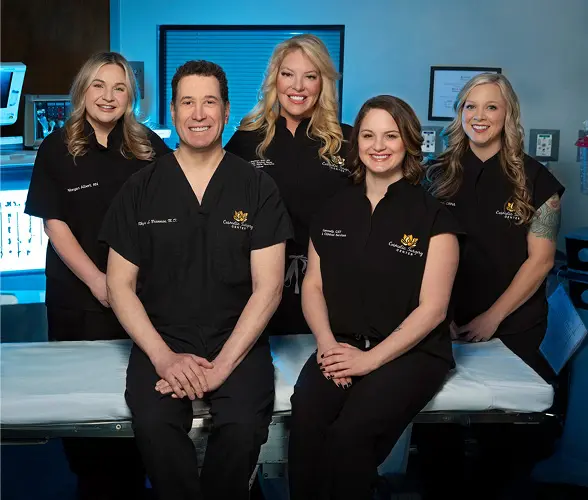
Under the direction of board certified cosmetic surgeon Dr. Rhys Branman, our Little Rock med spa Exhale Med Spa at Little Rock Cosmetic Surgery Center offers the latest in advanced laser technologies to achieve healthy, more youthful-looking skin. To learn more about our range of safe and effective non-surgical skin rejuvenation treatments, we invite you to request your consultation online or call Cosmetic Surgery Center at 501.227.0707 to meet our award-winning med spa team.