Learn how Dr. Rhys Branman can help you look up to 10 years younger
Aging is an inevitable though frustrating part of life—and wrinkles, sagging jowls, loose skin, and lines can make you appear much older than you feel. Your face is the first thing people see, and if you’re bothered by the story it’s telling, it can be difficult to feel confident. That’s why top Little Rock cosmetic surgeon Dr. Rhys Branman has spent years helping patients just like you achieve a smoother, firmer appearance with facelift surgery.
Unsurprisingly, the facelift is the most popular facial rejuvenation procedure in the United States—and it’s the only procedure that can help you look an average of 10 years younger while delaying further signs of aging.
What is a facelift?
A facelift, medically known as a rhytidectomy, is a cosmetic facial procedure aimed at creating a more youthful appearance. It involves the removal of excess skin, with or without the tightening of underlying tissues, and the redraping of the skin on the patient’s face and neck. This procedure is often sought to reduce sagging or folds of skin on the cheeks and jawline, which commonly occur due to aging. While a facelift can be effective in reversing the signs of aging, it does not stop the aging process, and the results can be influenced by factors such as the patient’s skin type, lifestyle, and genetics.
It’s essential that facelift patients have realistic expectations and to discuss potential risks and benefits with a qualified cosmetic surgeon. In addition to a surgeon’s skill and expertise, the success of a facelift can depend on various factors, including the your unique skin quality, age, and overall health.
The Best Facelift Candidates
Good candidates for facelift surgery are typically individuals who are in good health, have realistic expectations, and exhibit signs of facial aging that can be improved through the procedure, such as sagging skin, deep wrinkles, and jowls. Key factors towards being an ideal candidate include having decent skin elasticity and overall good health status.
People who are not ideal candidates include those with significant medical conditions that could impair healing, those with minimal signs of facial aging, or those seeking to address issues that a facelift does not correct, such as fine superficial wrinkles.
To determine if you are a candidate for a facelift, schedule a consultation with a qualified facelift surgeon who can evaluate your individual case, discuss your aesthetic goals, and assess your overall health and medical history to ensure the procedure is suitable for you.
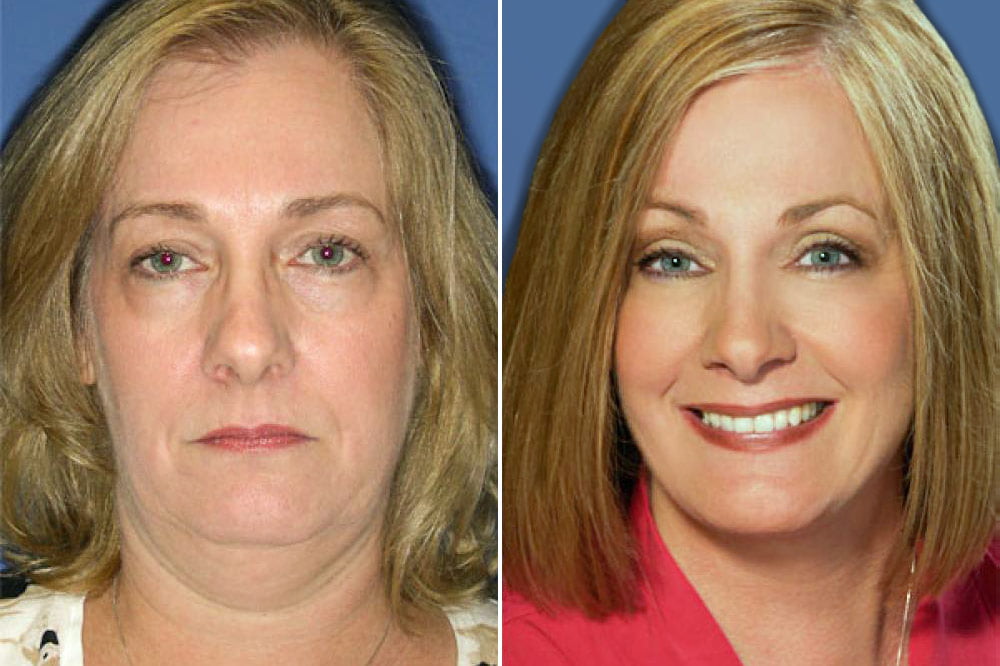
Before and after facelift with Dr. Rhys Branman
Your Facelift Options
Full (Standard) Lift
A standard full facelift, also known as a traditional facelift, is a comprehensive facial rejuvenation procedure designed to rejuvenate the lower two-thirds of the face and neck. A full facelift typically involves making incisions along the hairline and around the ears, through which Dr. Branman can remove excess skin, tighten underlying muscles and tissues, and reposition the skin for a smoother, more youthful appearance. This type of facelift primarily targets sagging skin, deep wrinkles, and loss of muscle tone in the cheeks, jawline, and neck area. By addressing these areas, a full facelift effectively reduces signs of aging and can restore a more natural and refreshed facial contour. The procedure is often best for individuals looking for a significant improvement in facial aging and can be customized to meet the specific needs and goals of each patient. (A facelift typically includes a neck lift, although neck lifting can be performed alone without addressing the lower face and jowls.)
SmartLift: Lower Face & Neck Lift
For patients who are bothered by more minimal signs of aging, particularly in the lower face and neck, a less-extensive facelift procedure may be better suited to achieving their goals. Many of Dr. Branman’s patients are good candidates for the SmartLift, which is more of a “mini” facelift, as it requires smaller incisions and less recovery time than a full face lift.
If you have a modest amount of sagging skin in the jowls and neck and prefer a non-surgical solution, Ultherapy skin tightening or Sofwave skin tightening may be a good option. Both treatments uses ultrasound to gradually lift and firm sagging facial tissues without any downtime.
“Having cosmetic surgery was a very personal decision for me. It was a decision not based on changing my looks, but returning my look that the years had changed. As a middle-aged woman I simply wanted to look as youthful and energetic as I still felt inside. Dr. Branman listened to me and understood exactly what my goals were. Also, as a registered nurse myself it was very important to me to find a surgeon that I had complete confidence in. I truly found that in Dr. Branman. Thanks to Dr. Branman people no longer ask me if I am tired when I am not. Would I do it over again? Yes.”
During your facelift consultation with Dr. Branman, he will conduct a thorough evaluation of your facial anatomy, skin quality, and overall health to determine if you are a suitable candidate for the procedure. He will discuss your aesthetic goals, review your medical history, and may also take photographs for your medical record. He will carefully explain the different facelift techniques, what the surgery entails, the expected outcomes, and go over any potential risks and complications. This consultation is also an opportunity for you to ask questions and express any concerns you may have. The goal of your consultation is to ensure you are well-informed about the procedure and to provide you with a personalized surgical plan that aligns with your expectations and health status.
Preparing for Surgery
The best thing you can do to ensure great results and a smooth and safe recovery from facelift surgery is to be healthy. Stop smoking at least one month prior to surgery; smoking severely increases your risk for complications and interferes with healing. Aspirin or aspirin-containing compounds should be avoided two weeks before and after surgery. Dr. Branman will give you a detailed list of foods and medications to avoid at your pre-surgical appointment.
What is involved in facelift surgery?
Your surgery will be performed under general anesthesia or local anesthesia with IV sedation at an accredited hospital or our surgical center. Dr. Branman will begin by making an inconspicuous incision near the ear, allowing him to reposition the underlying muscle and connective tissue and remove any excess fat or skin. After gently redraping the skin, the incisions are closed with special sutures or metal clips. The entire procedure requires approximately two to three hours.
After your facelift procedure, Dr. Branman will apply a dressing to protect the incisions, which will remain for 24 hours. You will need to keep the area dry until the sutures are removed, so be sure to follow the provided aftercare instructions about bathing or showering during this time. As with most facial surgery procedures, patients can expect some swelling and discoloration of the face and eyelids, which are most notable during the first few days of recovery and subside in approximately 12 days, depending on the individual.
When can I go out in public after my procedure?
As your facelift results start to look their best, you’ll no doubt be eager to give your hair and wardrobe a boost to show off your new, younger appearance. While most daily activities are okay after a few weeks, make sure you follow your surgeon’s instructions. Below are some general guidelines for hair, makeup and jewelry wearing after a facelift:
Make-up may be applied up to the edge of the surgical scars approximately 1-2 weeks after surgery.
While you may go to the salon about 2 weeks after surgery, you will have to wait a few weeks longer for any coloring or perms. Tell your stylist not to pull on your hair or roughly massage the scalp.
Your hair dryer should be set at medium to cool heat. This is important if any numbness, especially around the ears or temples, is noted.
Do not wear earrings until sensation has returned to your earlobes.
Social activities may be temporarily limited and strenuous exercise should be avoided for four to six weeks.
We encourage you to call Dr. Branman with any questions you have about what is okay as you recover from your surgery. We are here to ensure that your recovery is as safe and smooth as possible.
Remember that healing is a gradual process and it may be several weeks before you will begin to see the aesthetic improvements in your face. After the healing period is complete, a facelift can make you look younger, and may even improve your self-confidence. Click here to see Facelift before & after photos.
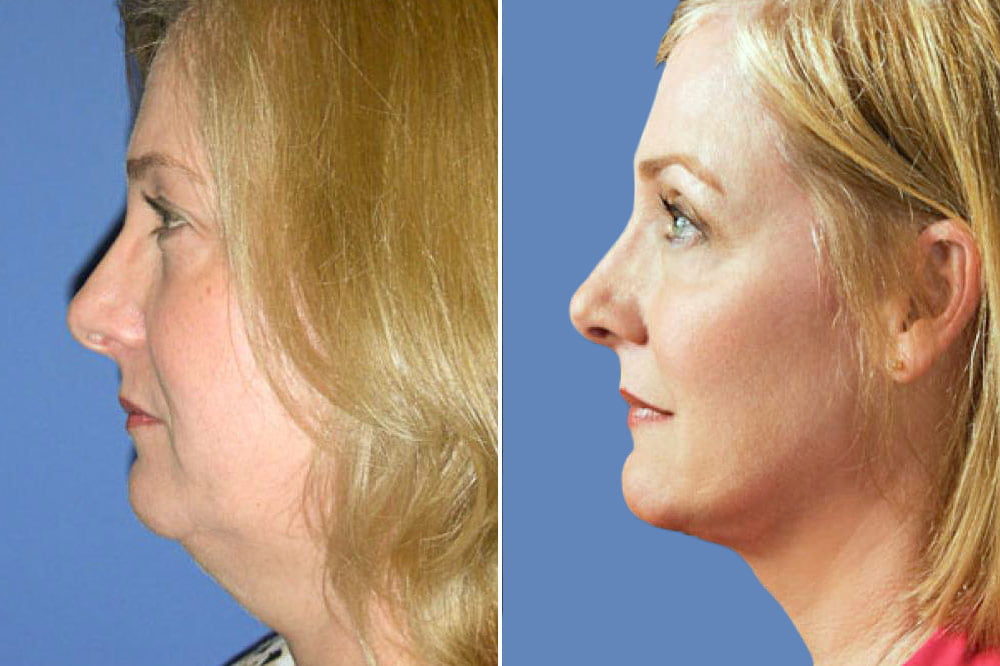
Before and after full face and neck lift with Dr. Rhys Branman
Potential Risks & Side Effects
There are risks in every surgical procedure and these will be thoroughly discussed with you prior to surgery. Though you will have scars, Dr. Branman makes takes care to make them as inconspicuous as possible. Dr. Branman will prescribe pain medication to alleviate discomfort after surgery. Be sure to call us if you experience any significant pain not readily relieved with pain pills or if minor bleeding, redness, or other drainage is noted around the incisions.
Slight temporary numbness may be noted around the ears, cheeks, and incision areas. Infection, bleeding, and areas of skin or hair loss are possible but rare. Nerve damage is another very rare occurrence. You can minimize your risk of complications by being a healthy non-smoker before surgery and following Dr. Branman’s instructions carefully during recovery.
Reduced Signs of Aging: A facelift can significantly reduce the appearance of wrinkles, fine lines, and sagging skin, particularly around the lower face and neck, giving a more youthful and refreshed look.
Improved Facial Contours: By repositioning and tightening the underlying tissues, a facelift can enhance the contours of the face, such as the jawline and cheeks, providing a more defined and aesthetically pleasing facial structure.
Long-lasting Results: Compared to non-surgical cosmetic anti-aging treatments, facelifts offer more durable and long-term results, often lasting several years.
Enhanced Self-Confidence: Improving facial appearance can lead to increased self-esteem and confidence, as individuals often feel better about how they look.
Correction of Specific Age-related Issues: Facelifts can address specific aging signs like jowls, deep creases from the nose to the corners of the mouth, and loose skin and excess fat under the chin and jaw.
Carefully Catered to You: Facelifts can be tailored to the specific needs and goals of the individual, and can also be combined with other procedures like eyelid surgery or a brow lift for a more comprehensive facial rejuvenation.
Natural-Looking Results: Modern techniques in facelift surgery aim to produce natural-looking results, avoiding an overly “tight” or “pulled” appearance.
Anesthesia: Medication used during surgery to prevent pain. Types used in facelifts include local (numbs a specific area) and general (induces unconsciousness).
Blepharoplasty: A surgical procedure to improve the appearance of the eyelids. Often performed in conjunction with facelifts to enhance overall facial rejuvenation.
Collagen: A protein in the skin that provides structure and elasticity. Decreases with age, leading to wrinkles and sagging skin, which facelifts aim to correct.
Deep Plane Facelift: A type of facelift surgery that addresses deeper facial structures for more comprehensive rejuvenation, often resulting in more natural and long-lasting results.
Endoscopic Facelift: A less invasive facelift technique using an endoscope (a small camera) to minimize incisions and scarring.
Facial Aging: The natural process of aging that affects the face, including skin laxity, volume loss, and the development of wrinkles and lines.
Incision: A cut made during surgery. In facelifts, incisions are typically made along the hairline or behind the ears to minimize visible scarring.
Jowls: The sagging skin below the jawline, often targeted in facelift procedures to create a more defined and youthful jawline.
Mini-Facelift: A less invasive version of a traditional facelift, targeting the lower third of the face with smaller incisions and shorter recovery time.
Neck Lift: A procedure often performed in conjunction with a facelift to address sagging skin and excess fat in the neck area.
Otoplasty: Ear surgery that can be performed for aesthetic reasons, often in conjunction with facelifts to balance facial features.
Platysma: The muscle in the neck that can contribute to a sagging appearance. Often tightened during a neck lift or facelift.
Recovery Period: The time required for healing after a facelift procedure. This varies based on the extent of the surgery and the individual’s health, typically ranging from a few weeks to several months.
Rhytidectomy: The medical term for a facelift, a surgical procedure aimed at reducing signs of aging in the face and neck.
Scarring: The formation of fibrous tissue as the skin heals after an incision. In facelifts, efforts are made to minimize and conceal scars within the hairline or natural skin folds.
SMAS (Superficial Musculoaponeurotic System): A layer of tissue deep within the skin that is often adjusted during facelifts to provide more natural and lasting results.
Tissue Repositioning: A technique used in facelifts to move and adjust facial tissues for a more youthful appearance.
Ultherapy: A non-surgical procedure that uses ultrasound technology to lift and tighten the skin, sometimes used in conjunction with or as an alternative to traditional facelifts.
Volume Loss: A common sign of aging where the face loses fat, leading to a sunken or hollow appearance. Facelifts often address this through repositioning or adding volume.
Wrinkles: Lines and creases in the skin, often a focus of facelift procedures to smooth out and rejuvenate the face.
Facelift Results
After facelift surgery, patients can expect a more youthful and refreshed appearance, with reduced signs of aging such as sagging skin, deep wrinkles, and jowls. While some improvements may be noticeable immediately, it’s important to note that results are not immediate due to swelling and bruising that can obscure the final outcome. Your full facelift results will become evident within several months as the swelling subsides and the skin settles into its new position. It’s important to note that although facelift results are long-lasting, they do not halt the aging process. Factors like skin elasticity, lifestyle choices, genetics, and ongoing aging can affect the longevity of your results. Therefore, while a facelift can turn back the clock, it doesn’t stop it, and over time, some signs of aging may reappear.
“This has been one of the best experiences of my life so far! Everyone has been so nice, respectful, encouraging, and informative from the front desk all the way to Dr. Branman himself.”
The cost of a facelift in Little Rock, AR will vary depending on the extent of the procedure needed to achieve your desired results. During your facelift consultation, we will provide you with an exact quote for your unique surgical plan. To help make paying for your facelift more accessible, we offer financing plans as well as regular specials and promotions.
Can a facelift be combined with other procedures?
A facelift can often be combined with other facial cosmetic procedures to enhance overall appearance and provide more complete facial rejuvenation. Commonly paired facial procedures include eyelid surgery (blepharoplasty) to address aging eyes, a brow lift to correct a sagging brow line, facial fat transfer to treat volume loss, and sometimes, even non-surgical injectable treatments such as Botox and dermal fillers. Combining these procedures can help you address multiple areas of concern in a single surgical session, which can be more efficient and may also reduce overall recovery time.
Experience the best in facial rejuvenation
If you’re ready to talk to a cosmetic surgeon about your face lift options, we invite you to call or contact us for a consultation with expert facelift surgeon Dr. Rhys Branman. He will listen to your goals and concerns, answer your questions, and help you decide the best approach to make the improvements you have in mind.
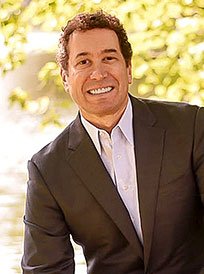
Dr. Branman is a board certified cosmetic surgeon with extensive experience in performing facial procedures. He has been helping Little Rock, Arkansas facelift patients meet their goals since 1998. He would be happy for you to come in to his Little Rock cosmetic surgery center for a consult to learn more about your facial plastic surgery options.