Chemical Peels
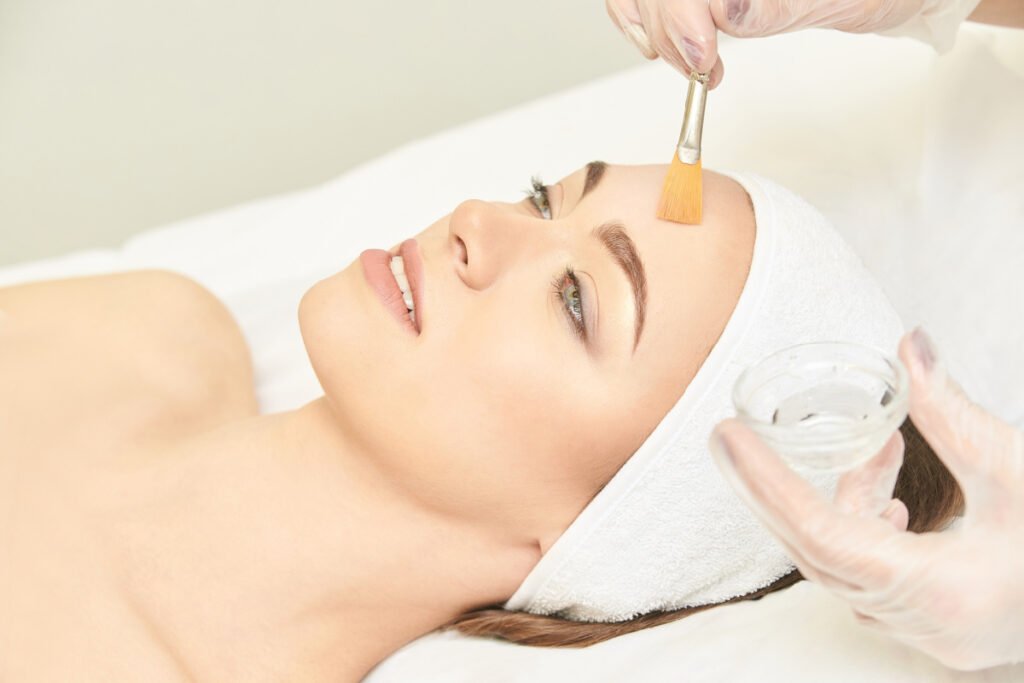
For smoother, fresher skin and a more glowing complexion, there is nothing we love more than a chemical peel! By applying a customized solution to the surface of the skin to peel away the dull, damaged cells, your skin can heal naturally with a fresh, new layer of skin. We offer a variety of chemical peels at our Little Rock med spa.
Who can benefit from a chemical peel?
Chemical peels can rejuvenate the skin and correct or improve the appearance of many superficial skin conditions for men and women of any age. Some of the common treatment applications include the following:
- Reduction of fine wrinkles
- Improve skin texture
- Softening of scars and acne scars
- Correction of uneven pigment
- Removal of blemishes
Video Transcript »
Host:
We love to talk about all the services at the Cosmetic Surgery Center, but we like even more to see them right here on the show. Dr. Rhys Branman joins us today, and you brought Crystal back to talk about chemical peels.
Dr. Branman:
Chemical peels! Yeah, you asked me this question before, but go ahead and ask me again.
Host:
Who did the first chemical peel?
Dr. Branman:
Ancient Egyptians! Remember? A long time ago.
Host:
Okay, the Egyptians. I was trying to think of a person, but we’re talking about a whole civilization.
Dr. Branman:
That’s right. They were the first ones to do chemical peels, using natural products from their environment, like acetic acid. We’ve come a long way since then, but it all started there.
Host:
And thanks to Crystal, you’ve really expanded the skincare and facial services at the Cosmetic Surgery Center.
Dr. Branman:
Absolutely, thanks to Crystal.
Host:
Crystal, some people worry that chemical peels are too harsh or harmful. What do you say to that?
Crystal:
They really aren’t. Chemical peels range from very light, like glycolic acid, to medium ones like salicylic acid, and then to stronger ones like trichloroacetic acid. We use medical-grade peels, and they’re applied by professionals, so they’re quite safe.
Host:
Okay, Crystal, tell us what you’re doing here.
Crystal:
I started by cleansing her skin and prepping it to remove natural oils so the acid adheres better. Now, I’m applying a salicylic acid peel. It’s great for breakouts, oil control, and inflammation. It also brightens the skin and smooths out fine lines.
Host:
This time of year, with all the dry winter skin, it sounds perfect.
Dr. Branman:
Exactly. It removes that dead skin layer and lets you start fresh. Then, we hydrate the skin with HA5 and TNS serum. We usually do a series of three peels to get the best results.
Host:
How does it feel? People worry about discomfort.
Patient:
It’s not uncomfortable at all. Just a little tingle, but you know it’s working.
Crystal:
Yes, it neutralizes itself, so it’s pretty gentle. I can control the depth and add layers depending on what the patient needs.
Host:
And you always put sunblock on afterward, right?
Crystal:
Yes, always. And the skin will get a little pink, but that means it’s working.
Host:
What do patients say about their results?
Crystal:
They love it. Their skin feels so much smoother and brighter.
Host:
It sounds like a great Valentine’s Day gift!
Dr. Branman:
Yes, we’re even giving away a series of three peels to the seventh caller. And we’ve opened up more spots for our peel event since it’s been so popular.
Host:
Perfect! Call now to get in on this. Thanks, Dr. Branman and Crystal!

“Beautiful and super updated Clinic/Spa. Everything is perfect, neat, the staff is so kind and organized, as soon as you walk through the door, the girls great you by your name. I highly recommend Cosmetic Surgery Center, in Little Rock AR, Dr Branman and his staff. It is well worth the trip to LR!”
Your chemical peel options in Little Rock
We offer a variety of chemical peels to suit different skin types and concerns. During your consultation, we will discuss your concerns and goals and help you choose the right peel for your needs.
SkinCeuticals Chemical Peels
Smart TCA Peel – $200
Treats advanced fine lines + wrinkles + discoloration
Downtime: 5-7 days
*We recommend a series of 3 every 28 days for optimal results
Clear & Clean Peel – $97
Treats clogged pores + acne + rough texture + uneven skin tone
30% Salicylic Acid
Downtime: 0-3 days
Clear Peel – $150
Skin Type: Oily, Sensitive, Combination
Skin Condition: Acne, Aging, Discoloration
- Peel layer 1: SkinCeuticals Micropeel Sensitive Skin Solution
- Peel layer 2: SkinCeuticals Gel Peel
- Post-Peel: Clarifying Clay Masque
Maintain and Enhance the Results of your Peel with SkinCeuticals products: Discoloration Defense, Retinol, Glycolic 10 Renew Overnight, Metacell Renewal B3, Cell Cycle Catalyst
Nourish and Hydrate Peel $150
Skin Type: Dry, Normal
Skin Condition: Dehydrated, Aging
- Pre-Peel Layer: Clarifying Clay Masque + Retexturizing Activator
- Peel: SkinCeuticals Micropeel Sensitive Skin Solution
- Post-Peel: Phyto Corrective Masque + Biocellulose Restorative Masque
Maintain and Enhance the Results of your peel with SkinCeuticals products: Hydrating B5 Gel, Retinol, Glycolic 10 Renew Overnight, Triple Lipid Restore 2:4:2
VI Peel Chemical Peels
VI Peel “Purify”
For Skin Concerns:
- Active acne
- Breakout-prone skin
- Oily and congested skin
- Teen acne (13+)
This formula works great for patients of Hispanic descent due to increased sebum production.
Product Benefits:
VI Peel Purify is a highly effective treatment for acne. It contains the original VI Peel formula plus the power of Benzoyl Peroxide, Kojic Acid, and Hydrocortisone for superior and consistent results. VI Peel Purify is a targeted solution to tackle active acne and acne prone skin.
VI Peel “Precision Plus”
For Skin Concerns:
- Irregular pigmentation in the skin, including UV-induced hyperpigmentation
- Melasma
- Post-Inflammatory Hyperpigmentation (PIH)
This formula works great for patients of Asian descent due to tendency for hyperpigmentation.
Product Benefits:
VI Peel Precision Plus Dual Booster System combats pigmentation with our hydroquinone-enriched Lighten Booster and fast acting Brighten Booster, VI Peel Precision Plus effectively suppresses melanogenesis and promotes rapid cell turnover.
VI Body Peel – $400
For Skin Concerns:
- Pigmentation and fine lines on the Décolleté
- Body Acne
- Scars from Acne, Surgeries, or Injuries
- Stretch Marks
- Sagging skin
Product Benefits:
VI Peel Body treatments stimulate anti-aging collagen to increase cellular turnover. Help target troubled areas and reveal smoother, more radiant skin in just one treatment. Safe for all skin types, tones, and textures, so it’s a peel for every body.
More chemical peel options
Preparing for your chemical peel
Depending on your needs, Retin-A—a prescription medication derived from Vitamin A—may be used to pre-treat the skin. This thins out the skin’s surface layer, allowing the solution to penetrate more deeply and evenly. Hydroquinone, a lightening agent, is sometimes used as well if you have blotchy skin areas or pigmentation problems. You may need to spend several weeks in the pre-treatment phase before your actual peel.
What to expect during treatment
Most chemical peels are performed in-office at our medical spa, with our experienced licensed medical aesthetician. Anesthesia is not required for most of our peels, which only cause only a slight stinging sensation during application.
First, the skin is thoroughly cleansed. Next, we will apply the selected peel formula to your cleansed facial skin; this process usually takes no more than 10 to 15 minutes. Any stinging sensation you feel as the peel solution is applied will quickly pass. Depending on the strength of the peel, periodic treatments may be necessary until the desired effects are achieved.
After your chemical peel
After a peel, it is common to experience some temporary flaking or scaling, redness and dryness of the skin. Stronger or deeper peels may also cause some swelling. You may need to arrange for someone to drive you home and help you out for a day or two if you are having a deeper peel.
Downtime varies depending on the type and depth of the peel. Lighter peels (i.e., lactic acid or glycolic acid) may require no downtime at all, while patients may need several days of downtime following a medium peel, such as a Ultra Jessner’s or stronger TCA peel.
It is essential that you follow post-treatment instructions. Protecting your skin from the sun is essential following any peel. Our skincare team can recommend a broad-spectrum sunscreen that will protect your skin without irritation or a greasy feel.
When will I see results?
Improvements from light peels may be very subtle at first. You may detect a healthier glow to your skin. With continued treatments, you will notice a general improvement in the texture of your skin. After a stronger peel, your skin will be noticeably smoother and your complexion will be improved, with fewer fine wrinkles, fewer blemishes and more even-toned skin. Your results will be long lasting, although not immune to the effects of aging and sun exposure.
What are the risks of chemical peels?
Chemical peels are a normally safe and popular way to treat facial wrinkling and fine scarring. While complications are uncommon, you can help ensure a successful outcome by choosing a provider well-trained in chemical peeling techniques, and closely following pre- and post-treatment instructions. Patients with liver, kidney or heart ailments, need to make their cosmetic surgeon aware of them. You should also tell us about any food or substance allergies you have, as certain peels may contain similar ingredients.
Although there are peels of varying strength levels to fit almost anyone, it is still important to consider your skin type. The best candidates are usually those with fair, thin skin. Deeper chemical peels are usually not recommended for highly pigmented skin, such as Asian, black and Mediterranean, or oily complexions.
Trust us with your skin treatmentUnder the direction of board certified Little Rock cosmetic surgeon Dr. Rhys Branman, our Little Rock med spa Exhale Med Spa at Little Rock Cosmetic Surgery Center offers the latest in non-surgical skin treatments and technologies to achieve healthy, more youthful-looking skin. To learn more about our range of safe and effective non-surgical skin services, we invite you to request your consultation online or call Cosmetic Surgery Center at 501.621.2707 to meet our award-winning med spa team.